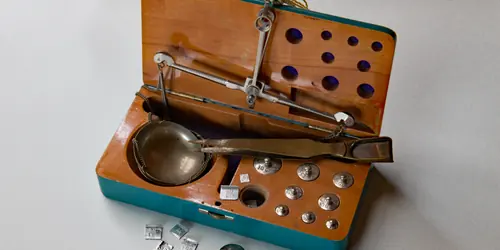
Carat
Weight, measured on a calibrated balance to the hundredth of a carat, not a measure of size alone.
Scale
0.15 ct and above, to two decimal places

A report records observation, not value. It states what the stone is, where it came from, how it was cut, and what has been done to it.
Each is judged independently under controlled light against master stones. None of them averages into the others, and the same scales are applied to natural and laboratory-grown diamonds alike.
Weight, measured on a calibrated balance to the hundredth of a carat, not a measure of size alone.
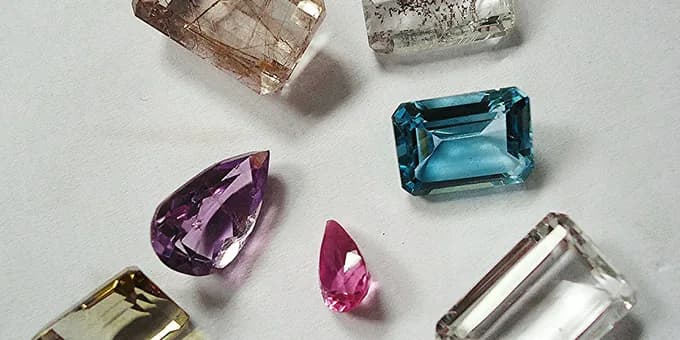
Absence of body colour, judged face down against master stones in controlled daylight-equivalent light.
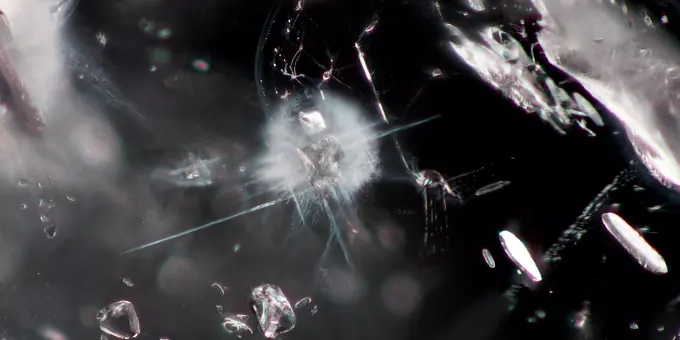
Inclusions and surface features at 10x, located and drawn on the plot rather than merely counted.
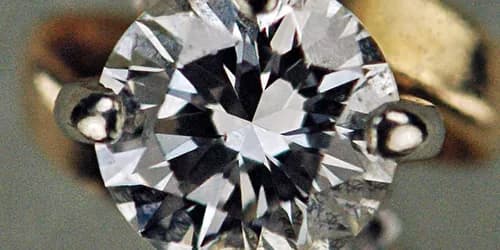
How the proportions return light. Graded for round brilliants from measured angles, polish and symmetry.
| Report | Prefix | States | Issued for |
|---|---|---|---|
| Diamond Grading Report | IJI-D | Four Cs in full, proportions, finish, fluorescence, plotted inclusions, origin stated as natural. | Loose natural polished diamonds, 0.15 ct and above. |
| Laboratory-Grown Diamond Report | IJI-L | The same four Cs, plus growth method and post-growth treatment, on a visually distinct document. | Loose laboratory-grown polished diamonds. |
| Identification Report | IJI-C | Species, variety, measurements, colour description, treatment, and origin opinion where supported. | Coloured stones, loose or in a simple mount. |
| Finished Jewellery Report | IJI-J | Article and metal, stone count, estimated weights and grade ranges, hallmark verification. | Mounted pieces graded as worn. |
| Pearl Report | IJI-P | Natural, cultured or imitation, nacre observation, processing, dye and irradiation notes. | Single pearls and strands. |
| Descriptive Record | IJI-R | Measured and photographed description for appraisal or insurance. Carries no grade summary and no value. | Owners and insurers needing documentation. |
Beyond the four Cs, every report answers the questions of origin and intervention. A diamond report that leaves any of them blank is not one of ours.
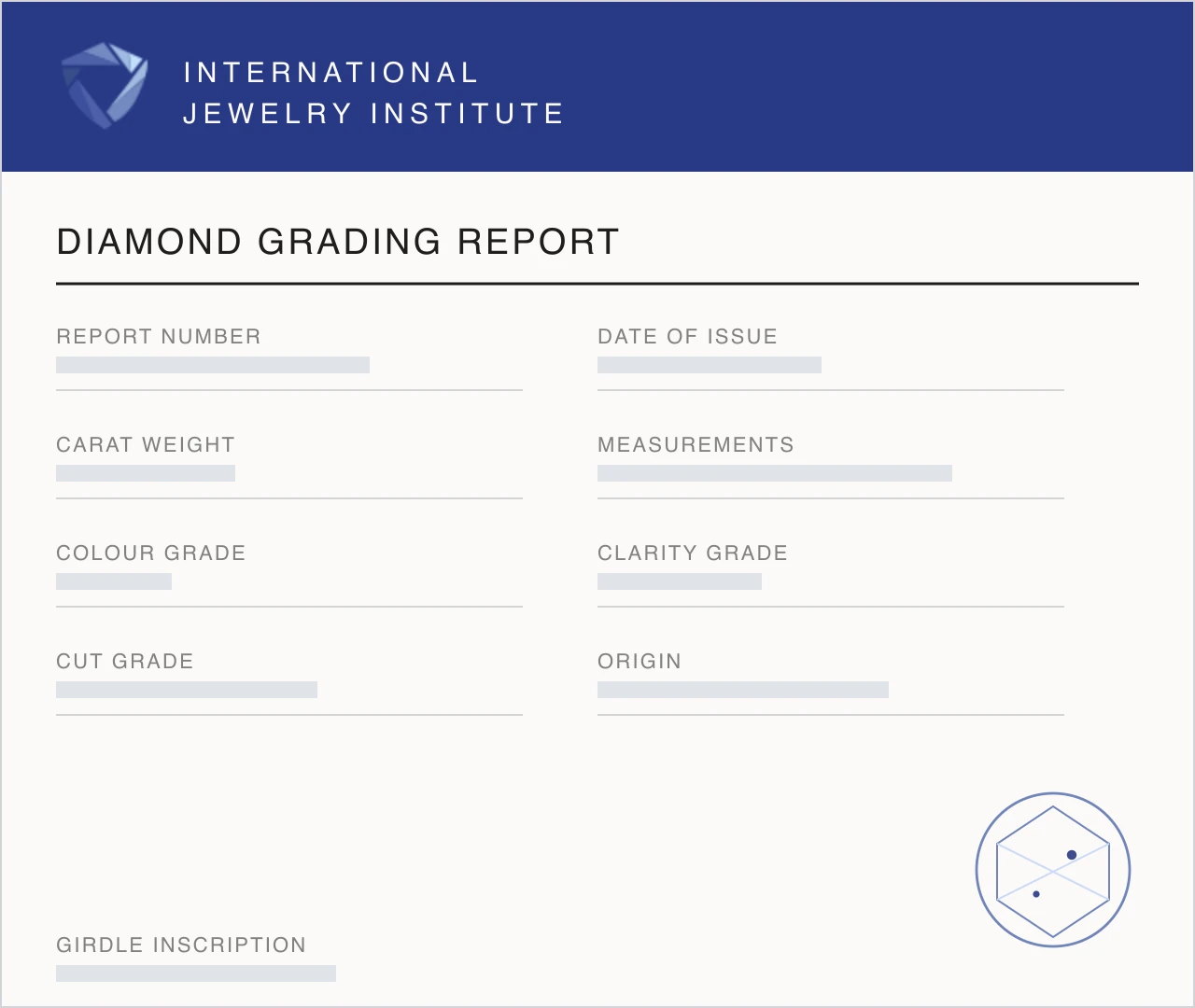
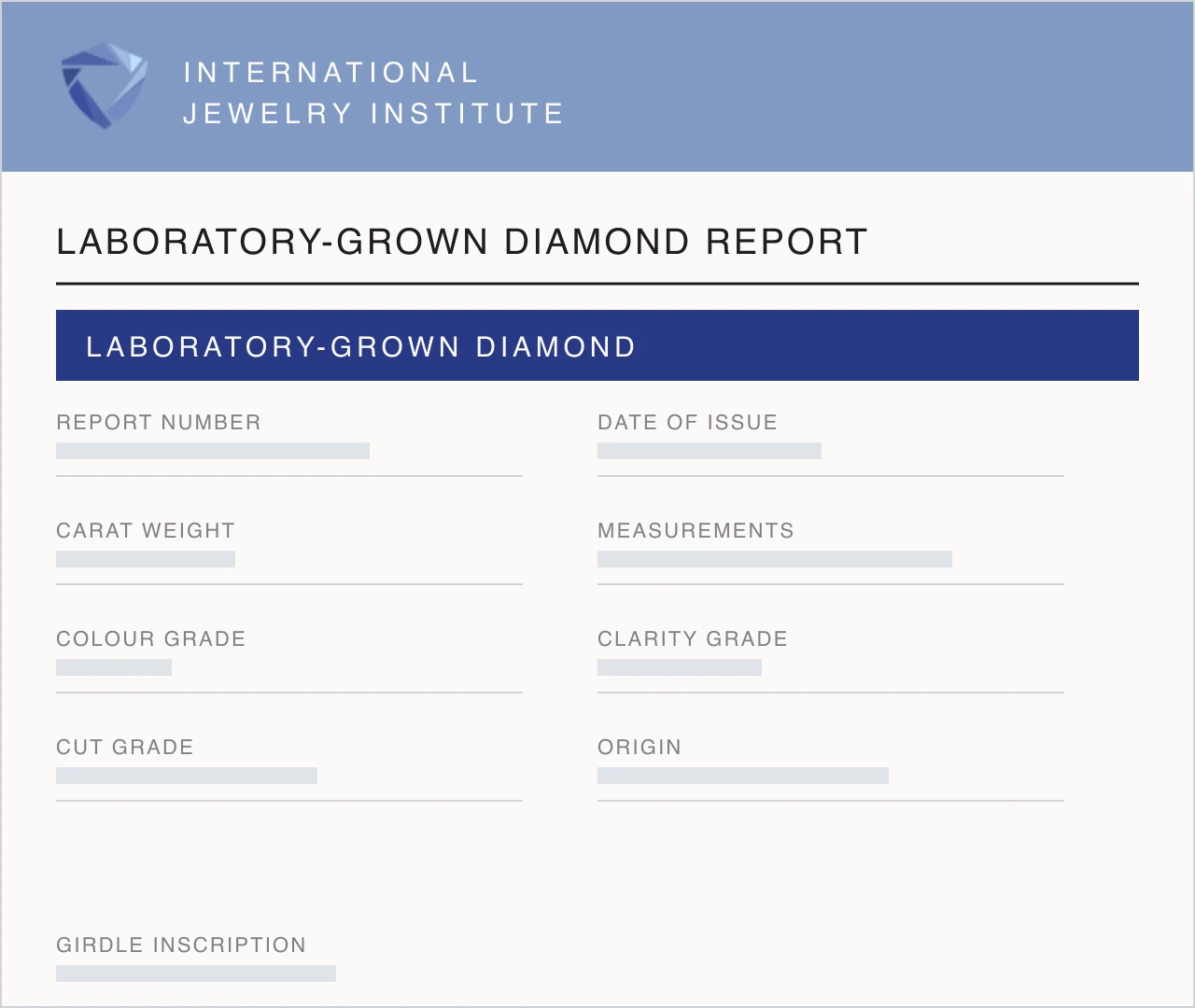
Stated as natural or laboratory-grown, in words, on the front of the report. Never abbreviated, never implied by a symbol.
HPHT or CVD, identified from growth structure and spectroscopic evidence.
Clarity enhancement, colour treatment, heating, filling, coating or irradiation, each named where detected, or recorded as none detected.
An opinion, offered only where inclusion and trace-element evidence supports one, and clearly marked as an opinion when given.
If your question is about a specific report you are holding, the laboratory that issued it will answer in writing.
Enter the report number on the verification page. What appears is the record as the laboratory issued it: origin, weight, the grades and the girdle inscription. Compare each line against the document in your hand. A report is only evidence about the stone it was written for, so the check that matters is whether the record, the paper and the stone all agree.
Not necessarily, but it means the document cannot be relied on until the difference is explained. Retype the number without spaces, and check the prefix: D natural diamond, L laboratory-grown diamond, C coloured stone, J finished jewellery, P pearl, R descriptive record. Reports issued before 2014 sit in an archive and are not returned by the online lookup, so write to the laboratory named on the document. If the number appears on paper bearing our name and still returns nothing, do not let the goods change hands before you have spoken to that laboratory.
Neither, until someone examines the stone. The lookup shows what the laboratory wrote when it had the stone in front of it, which is why a printed document that disagrees with it has either been altered or was never ours — but a screen cannot tell you which, and it cannot tell you whether the stone in front of you is the one either document describes. Pause the transaction and bring both to any IJI laboratory, which will compare them against the archived record without charge.
Yes. A laboratory-grown diamond is diamond, and it is graded on the same scales, against the same master stones, to the same tolerances as a natural one. What differs is origin, not quality, so the record states the origin in words on the front of the report, names the growth method as HPHT or CVD, inscribes laboratory-grown on the girdle, and flags the database record for every future lookup.
Because value is a matter of the market on a given day and the institute has no business in that market. We do not buy, sell or broker gem materials, and no fee we charge depends on the grade returned. A report states what the stone is; your appraiser or insurer sets the figure, and the facts are worth more to them for our having no interest in the answer.
They belong to two different scales that are judged separately. Colour runs from D, meaning colourless, through to Z, light yellow or brown, and is assessed face down against master stones under daylight-equivalent light. Clarity describes what is inside and on the surface at ten times magnification, running FL and IF, then VVS1 to VVS2, VS1 to VS2, SI1 to SI2, and I1 to I3. Neither averages into the other, and neither is a score for the stone as a whole.
Trade clients submit at any laboratory counter or by insured courier with a completed take-in form. Private owners may submit through a member jeweller, or in person with proof of identity. Whichever route, the goods are weighed, photographed and sealed in front of you, and you keep a signed receipt carrying the parcel number.
No. Goods are anonymised at take-in and enter the laboratory carrying a number only, so a grader sees a parcel and never a client. Colour and clarity are then set by graders working independently of one another; where they disagree, the stone goes back for a further opinion rather than being split down the middle.